Digitizing the Admission Process – EMR

Jayasree B • Digital Excellence • 23.09.26
Author Affiliations

Internal Reference

Study Details
Published Sep 2026
Category Digital Excellence
Case Study ID NABH-CS-2026-4839

Initiative

The conventional admission process involved multiple manual activities and communication channels between consultants, the registration desk, nursing units, dietary services, and the insurance team.

These manual processes resulted in:

  • Delays in completing patient admissions.
  • Increased waiting time before bed allocation.
  • Manual communication through phone calls and paper requisitions.
  • Delayed bed preparation by nursing staff.
  • Late communication of prescribed dietary requirements.
  • Delays in initiating insurance processing.
  • Difficulty in maintaining confidentiality for sensitive admissions, such as Medical Termination of Pregnancy (MTP).
  • Increased risk of communication errors and duplication of work.

The hospital therefore required a standardized, automated, and integrated admission workflow to improve operational efficiency, strengthen interdepartmental coordination, enhance patient safety, reduce waiting time, and protect confidentiality for sensitive admissions.

Objectives

Integrated EMR-Based Admission Workflow

An integrated Electronic Medical Record (EMR)-based Admission Workflow was implemented to automate and standardize the inpatient admission process.

Workflow

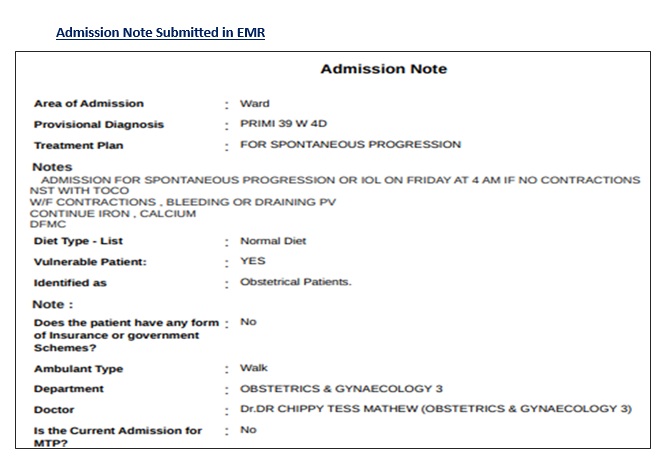
1. Consultant Admission Entry

The consultant creates an Admission Note in the EMR by selecting the relevant parameters:

  • Ward/Unit
  • Prescribed Diet
  • Vulnerable Patient
  • Insurance Tag
  • MTP Tag, where applicable

2. Registration

The Registration Desk completes the patient’s admission entry in the EMR.

3. Automated Workflow Activation

Once the admission is confirmed, the EMR automatically:

  • Notifies the assigned nursing station.
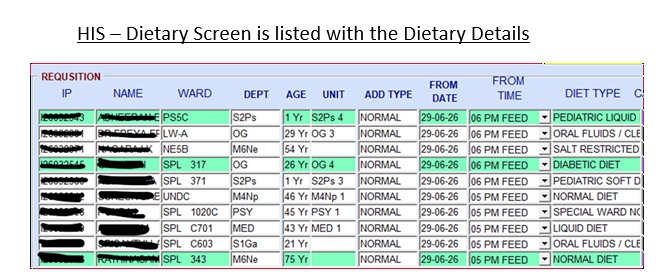
  • Sends the prescribed diet information to the Dietary Department.
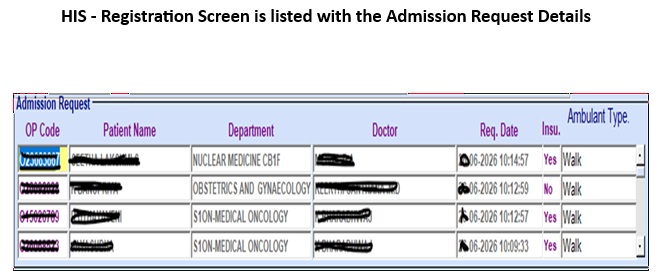
  • Alerts the Billing/Insurance Team.
  • Flags vulnerable patients for enhanced safety precautions.
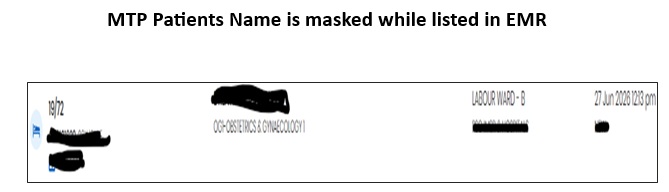
  • Activates identity masking for MTP patients to maintain confidentiality.

This integrated workflow enables real-time communication across clinical and support departments while reducing manual coordination, duplication of work, admission delays, and confidentiality risks.

Methodology

Key Features and Workflow Improvements

  • Integrated consultant-to-registration-to-ward admission workflow enabling seamless coordination from admission initiation to patient placement.
  • Instant notifications to nursing, dietary, and insurance teams upon admission confirmation.
  • Automated diet order transmission to ensure timely communication of prescribed dietary requirements.
  • Automated insurance tagging to facilitate early initiation of insurance-related processes.
  • Real-time vulnerable patient alerts to support enhanced patient safety and appropriate precautions.
  • Automatic identity masking for MTP admissions to protect patient confidentiality and privacy.
  • Paperless workflow with reduced duplicate documentation and manual communication.
  • Advance bed preparation enabling nursing teams to prepare the assigned bed and required services before patient arrival.

Results and Impact

Digital Impact

1. Patient Experience

  • Reduced admission waiting time.
  • Bed prepared and ready before patient arrival.
  • Timely provision of prescribed diet and nursing care.
  • Enhanced privacy and confidentiality for sensitive admissions.
  • Improved patient safety and overall patient satisfaction.

2. Operational Efficiency

  • Real-time multidisciplinary coordination across clinical and support departments.
  • Automated notifications to relevant teams.
  • Paperless admission workflow with reduced duplicate documentation.
  • Faster insurance processing with reduced manual coordination and follow-up.

3. Quality Outcomes

  • Standardized and consistent admission process.
  • Improved interdepartmental communication and documentation accuracy.
  • Reduced communication gaps and workflow duplication.
  • Enhanced compliance with applicable Digital Health Standards.

Challenges & Critical Success Factors

The successful implementation was supported by:

  • Integrated hospital-wide EMR platform.
  • Standardized digital admission workflow.
  • Leadership commitment to digital transformation.
  • Collaboration among clinicians, nursing, registration, dietary, billing, etc.
  • Automated workflow rules and real-time notifications.
  • Role-based access controls and privacy safeguards.
  • Staff training and continuous user support.
  • Ongoing monitoring and quality improvement.

Key Learnings

Digital workflows significantly reduce delays caused by manual communication.

Real-time information sharing improves coordination across clinical and support departments.

Automated notifications enhance preparedness and reduce patient waiting time.

Embedding patient safety and privacy features within the EMR improves compliance and quality of care.

Standardized digital processes minimize variation and documentation errors.

Supporting Documents