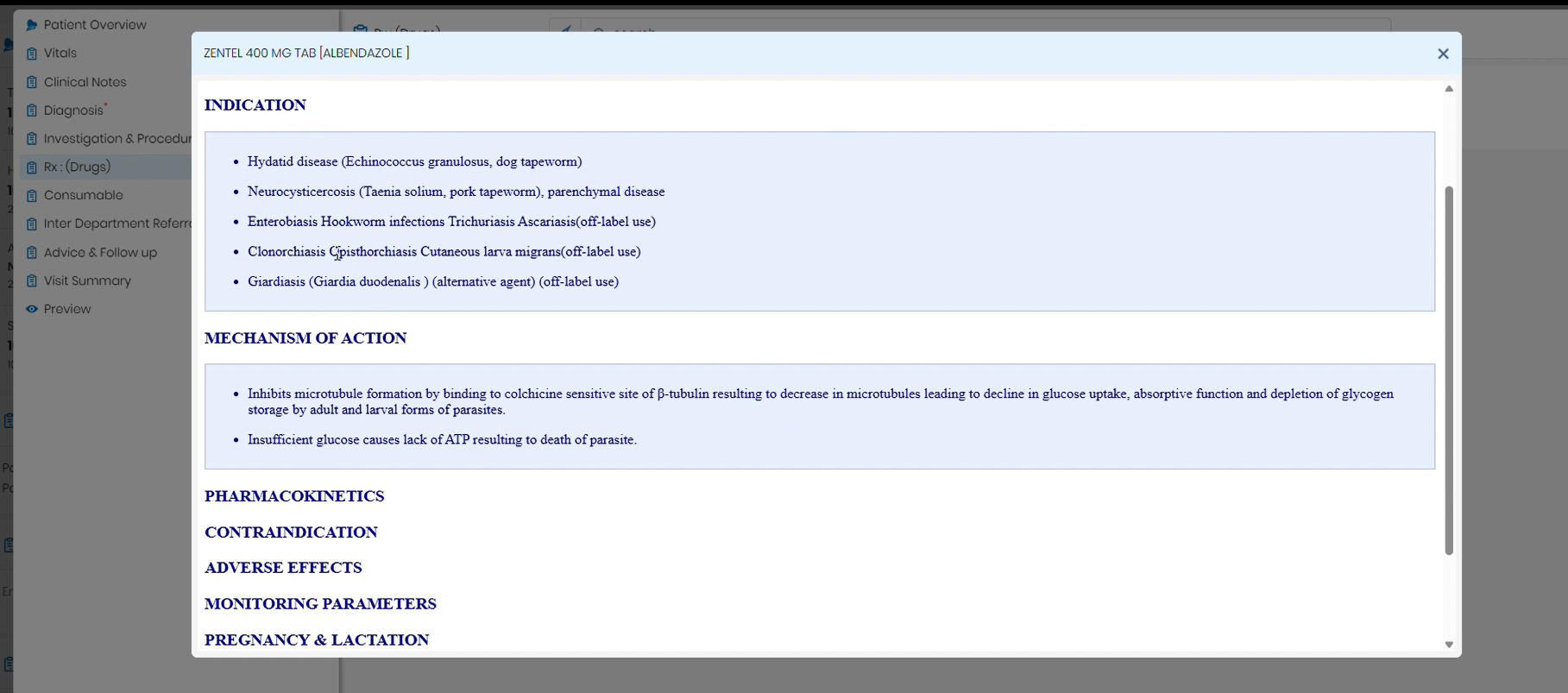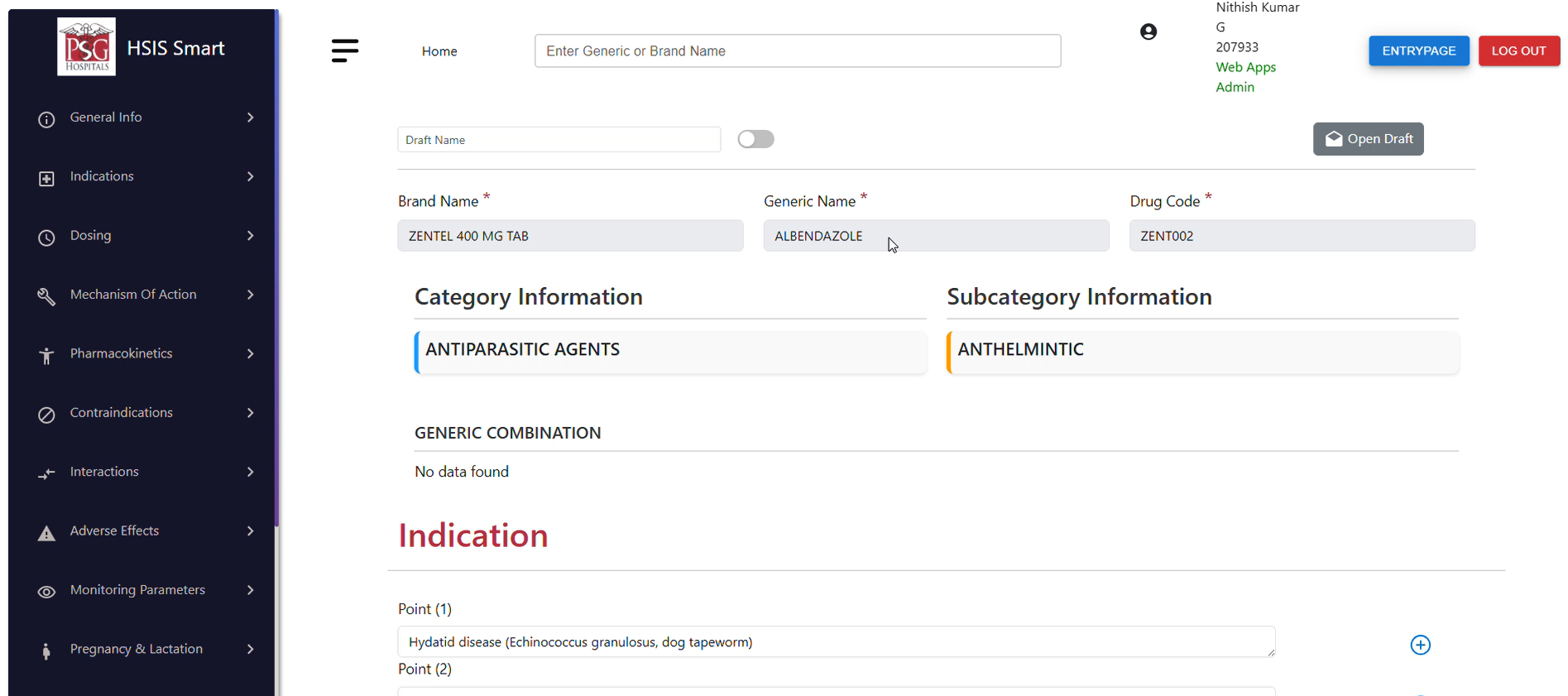
Before implementing the Drug Information Management System (DIMS), clinicians faced significant challenges in accessing accurate, up-to-date medication information during the prescribing process. Drug formularies, inventory status, therapeutic alternatives, and clinical guidelines were maintained across multiple disconnected sources, including printed manuals, spreadsheets, and pharmacy communications. This fragmented approach resulted in frequent non-formulary prescriptions, treatment delays, increased medication costs, and avoidable prescribing errors.
A digital solution was essential to integrate medication intelligence directly into the Electronic Medical Record (EMR), enabling clinicians to make evidence-based prescribing decisions at the point of care. The objective was to eliminate manual communication between physicians and pharmacists, improve formulary compliance, provide real-time inventory visibility, support generic substitution, and embed clinical decision support into routine workflows.
The primary stakeholders affected included physicians, who required instant access to reliable medication information; pharmacists, who spent considerable time clarifying prescriptions and recommending alternatives; nursing staff, who experienced delays in medication administration due to prescription modifications; hospital administrators responsible for controlling medication expenditure and inventory; and ultimately patients, whose treatment could be delayed by unavailable or inappropriate medications.
The initiative directly supported several NABH quality indicators, including medication safety, rational drug use, formulary compliance, reduction in medication errors, patient safety, antimicrobial stewardship, pharmacy operational efficiency, inventory optimization, cost-effective care, clinical governance, and standardized evidence-based prescribing practices. These quality improvements aligned with the hospital’s strategic objective of delivering safer, more efficient, and digitally enabled healthcare services.