Before implementing the Dietary App, inpatient dietary management at PSG Hospitals relied on paper-based documentation and telephone communication between nursing units, dietitians, and kitchen staff.
This manual process led to delays in communicating patient admissions, transfers, discharges, and physician-prescribed diet changes.
Nurses and dietitians spent considerable time on administrative coordination, reducing the time available for direct patient care.
The lack of real-time visibility increased the risk of incorrect diet delivery, delayed therapeutic nutrition, communication errors, food wastage, and inefficient resource utilization.
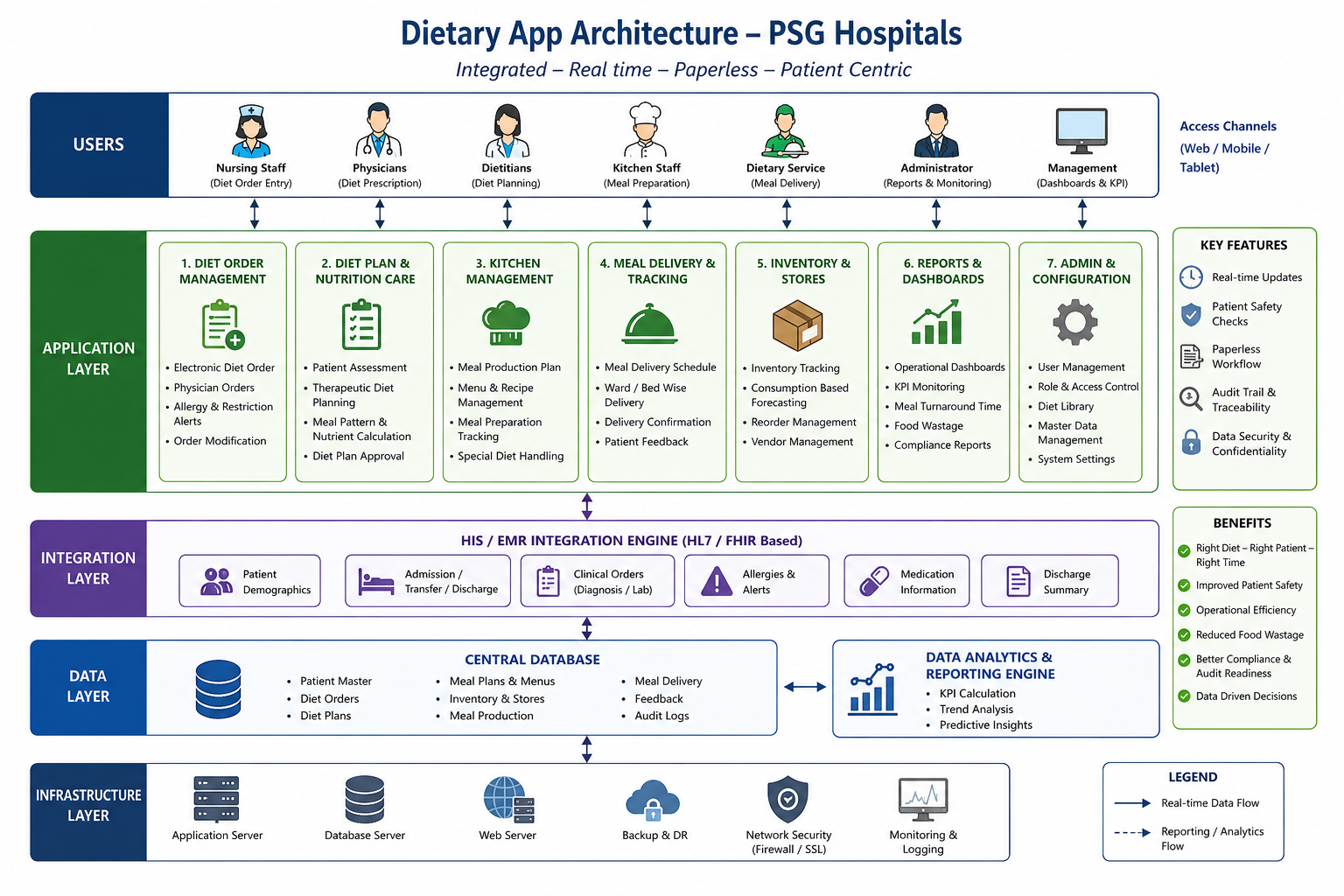
A digital solution was required to automate and standardize dietary workflows, integrate dietary services with the Hospital Information System (HIS)/Electronic Medical Record (EMR), and provide real-time communication among clinical and dietary teams.
The objective was to ensure the right therapeutic diet reached the right patient at the right time, while reducing manual errors, improving operational efficiency, and enabling data-driven monitoring of dietary services.
The primary stakeholders impacted were patients, who benefited from timely, safe, and personalized therapeutic diets; nursing staff, who experienced reduced documentation and coordination workload; and the dietary department, which achieved streamlined meal planning, improved communication, and reduced food wastage.
Hospital administration also benefited through enhanced operational visibility, productivity monitoring, and better resource utilization.
The initiative strengthened key NABH quality aspects, including Patient Safety, Patient-Centred Care, Clinical Effectiveness, Timeliness of Care, Communication and Care Coordination, Continuity of Care, Operational Efficiency, Resource Utilization, and Continuous Quality Improvement through an integrated, paperless, and data-driven dietary management system.