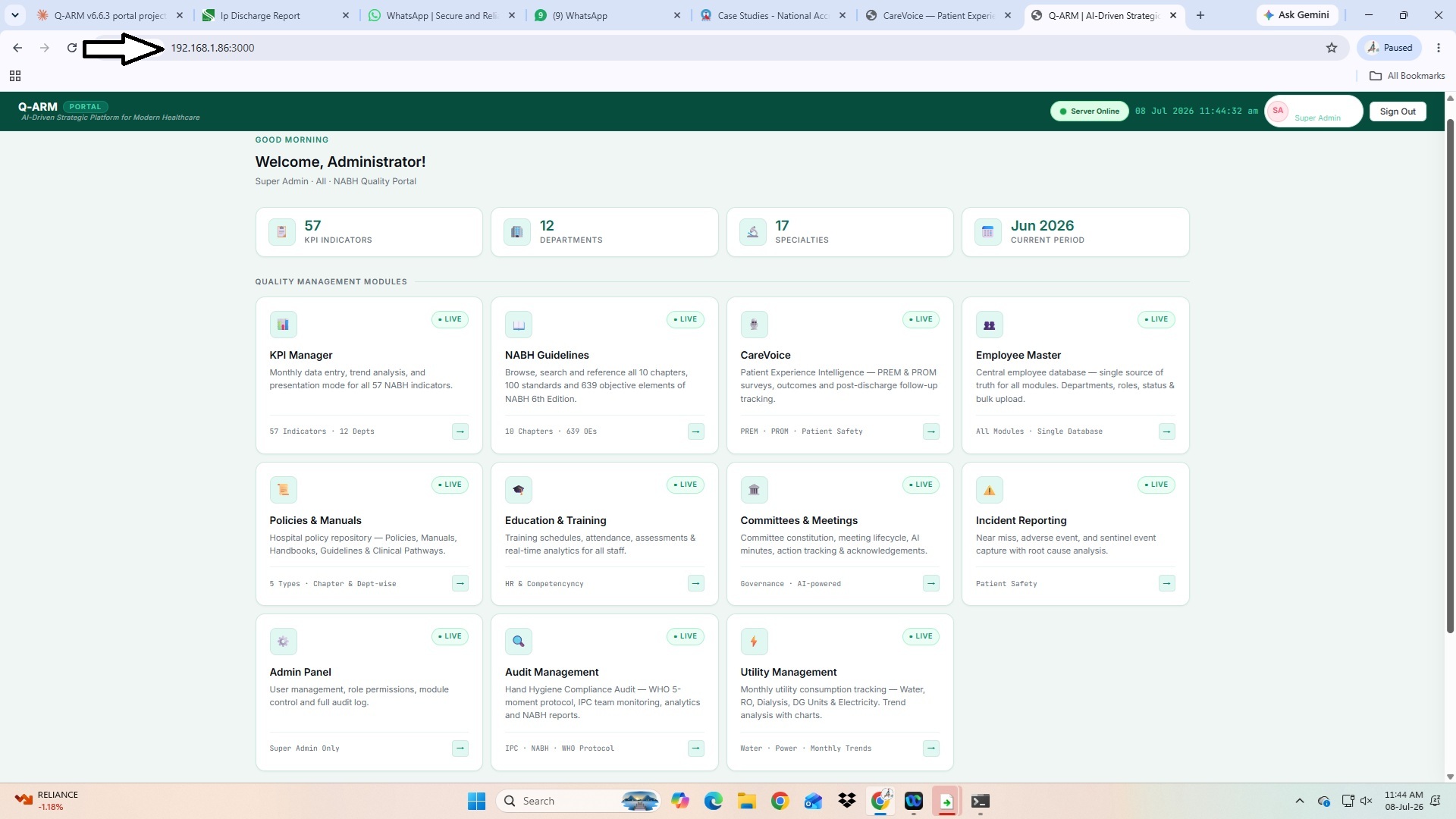
Aayush Hospitals, Vijayawada, faced a critical operational gap: hospital quality management was entirely fragmented – Hand Hygiene audits on paper, KPI data across 14 Excel files, committee minutes distributed via email/WhatsApp, medication chart compliance estimated subjectively, policy documents in unlocked physical binders, and incident root cause analysis in free-text with no structured framework. There was no unified digital platform.
The key challenge: quality data existed in silos. Monthly KPI reports took 2–3 days to compile after month-end. Committee acknowledgements had no medicolegal standing. Incident RCA had no consistent structure. Staff could not access NABH standards without the physical book. Leadership had no real-time visibility into compliance. A digital solution was required because manual systems were unable to provide the audit trails, trend analytics, and real-time compliance visibility that NABH accreditation demands – and no affordable integrated platform existed in the market.
Stakeholders most affected: Quality team (no real-time data), IPC auditors (manual HH compilation), Committee members (no digital acknowledgement trail), Pharmacy auditors (no structured MCA tool), Nursing leadership (no KPI trend visibility), Top Management (no live dashboard), Patients (no structured PREM/PROM capture).
Key NABH quality indicators and aspects impacted: IPC 6d (Hand Hygiene monitoring), MOM 4g (Prescription audit), PSQ 3 (KPI tracking), PSQ 7 (Incident management), ROM 1 (Committee governance), PRE 7 (Patient experience), HRM 5 (Training records), IMS 3 (Documentation management) – all 10 NABH chapters were affected by the fragmentation.